


Red Light Therapy Is Everywhere. But Most People Are Never Told What Actually Makes It Work.
Red light masks, glasses, wands and panels have become one of the fastest-growing categories in at-home skincare.
But there is something most brands leave out:
Seeing red light does not tell you how effectively that light is being delivered to your skin.
Red-light therapy is not simply about making LEDs glow red.
For photobiomodulation to be meaningful, the treatment depends on a combination of factors:
- The wavelength being emitted
- The intensity reaching the skin
- The length of each treatment
- The total energy delivered
- The consistency of placement
- How frequently the treatment is repeated
Change one of these variables, and the experience may be completely different.
That is why two devices that both appear to produce “red light” are not necessarily providing the same treatment.
Published photobiomodulation research uses defined wavelengths, irradiance levels, treatment durations and application schedules—not merely the presence of visible red LEDs.
This is the moment the customer begins viewing your product as technology, rather than another beauty accessory.

What Red Light Is Intended to Do Beneath the Surface
Red and near-infrared light are forms of non-ionising light used in a process called photobiomodulation.
Instead of removing or damaging tissue, photobiomodulation uses selected wavelengths to influence cellular signalling.
Research suggests that appropriate light exposure may support processes associated with:
- Cellular energy activity
- Collagen-related skin structure
- Skin texture
- Inflammatory signalling
- Tissue repair and recovery
The exact biological pathways are still being studied, and outcomes depend heavily on the dose and device parameters used. Clinical studies using defined red-light protocols have reported improvements in skin roughness, facial wrinkles and periocular wrinkle volume.
Then simplify it:
Creams apply ingredients to the skin. Photobiomodulation applies a controlled form of light energy to the treatment area.
That is a clean and understandable distinction.

The Five Numbers Behind Any Serious Red-Light Device
1. Wavelength
Measured in nanometres, wavelength determines the type of light being emitted.
Red-light facial rejuvenation studies have used settings including approximately 630, 633, 637 and 660 nanometres. Some devices combine red light with near-infrared wavelengths such as 830 or 850 nanometres. These are not interchangeable numbers, and you should only advertise the wavelengths your device genuinely produces.
2. Irradiance
Measured in milliwatts per square centimetre, irradiance describes how much optical power reaches a given area of skin.
A device may emit the correct colour but still deliver a different intensity depending on LED output, distance, angle and design.
3. Treatment time
Treatment duration affects the total energy delivered.
Your device runs for ten minutes, but the page should say:
A precise 10-minute treatment cycle.
Avoid saying:
“Removes bags in ten minutes.”
unless your exact finished product has been clinically tested for that outcome.
4. Energy dose
Usually measured in joules per square centimetre, the energy dose is calculated from irradiance and treatment time.
For example:
Irradiance × treatment time = approximate delivered energy dose.
This is one of the specifications you should openly publish once confirmed.
5. Consistency
Photobiomodulation is generally studied through repeated applications over several weeks—not as a one-time miracle treatment. Trials have used schedules ranging from multiple weekly treatments to regular treatment over several months.
This section makes the customer realise that your company understands red-light therapy more deeply than brands merely writing “red light” on the packaging.

Why We Designed a Skin-Conforming Patch Instead of Another Pair of Light Glasses
Many light-therapy glasses suspend LEDs in front of the face.
That format may be convenient, but the precise distance, angle and alignment between the LEDs and the lower eyelid can vary depending on:
- Face shape
- Nose shape
- How the glasses sit
- Movement during treatment
- The position of the LEDs within the frame
Our patches were designed differently.
They sit directly over the intended under-eye treatment zone, helping maintain more consistent placement throughout the session.
The key advantages
Targeted positioning
The light source is placed directly over the area the device was designed to treat.
Consistent distance
Because the patches are secured in place, the treatment geometry does not depend as heavily on how a glasses frame rests on the face.
Contoured coverage
Each patch follows the natural curve beneath the eye instead of treating the under-eye area from a rigid frame positioned farther away.
Reduced movement
The patches remain in position during the automatic ten-minute cycle.
Hands-free treatment
No wand needs to be held and no panel needs to be positioned.
Strong positioning line
The advantage is not simply that it touches your skin. It is that it holds the technology precisely where the treatment is intended to happen.
That is scientifically safer and more credible than claiming that “contact makes the light stronger.”

Light Therapy Was Only Half of the Design
The product also uses electrical stimulation delivered through conductive gel pads.
The gel pads do more than hold the device in place. They create the conductive interface needed for the electrical signal to travel comfortably and consistently across the treatment area.
Depending on the device’s confirmed electrical specifications, the stimulation may be positioned around:
- Supporting temporary muscle activation
- Helping energise the appearance of the treatment area
- Supporting local circulation
- Creating a more comprehensive treatment experience
- Complementing the skin-focused role of red light
Facial neuromuscular electrical stimulation has shown promising findings in small studies, including changes in facial muscle thickness, skin elasticity, wrinkles, sagging and blood flow. However, the evidence is still developing, and these results cannot automatically be attributed to every consumer EMS device.
Your strongest truthful explanation would be:
Red light is used to support the appearance and quality of the skin. Electrical stimulation adds a second form of targeted treatment designed to activate the area beneath it.
That gives the product a dual mechanism without making unsupported medical promises.
Why Red & Near-Infrared Light Is What Under-Eye Skin Needs Most Right Now
It works in the 630–660nm (red) and 830nm (near-infrared) range — wavelengths that penetrate into the dermis and get absorbed directly by your skin cells' mitochondria.
This is why clinics and dermatology settings use LED phototherapy for skin repair — it's:
Gentle enough for daily use (no heat, no downtime)
Non-invasive (no needles, no chemicals, no side effects)
Backed by clinical research on collagen stimulation and fine lines
Safe for regular, ongoing use
When under-eye skin is this thin and slow to repair, red light is the most direct way to actually reach it.
Our patches use medical-grade LEDs at clinically studied wavelengths — no guesswork, no diffuse light, just direct, consistent delivery every session.


Aevum Under-Eye Recovery Patches™
Aevum Under-Eye Recovery Patches™
 RED LIGHT + EMS · 10-MINUTE TARGETED UNDER-EYE TREATMENT
Two Technologies Targeting the 3 Signs That Age Eyes First.
 Targeted red light supports skin renewal — delivering selected wavelengths directly over the delicate under-eye area.
EMS adds gentle electrical stimulation — using conductive gel pads to help activate and energise the treatment area
Skin-conforming placement keeps treatment precise — holding the technology directly where it is intended to work throughout the 10-minute session.
Rechargeable technology, not disposable patches — reuse the electronic devices and replace only the conductive gel pads.
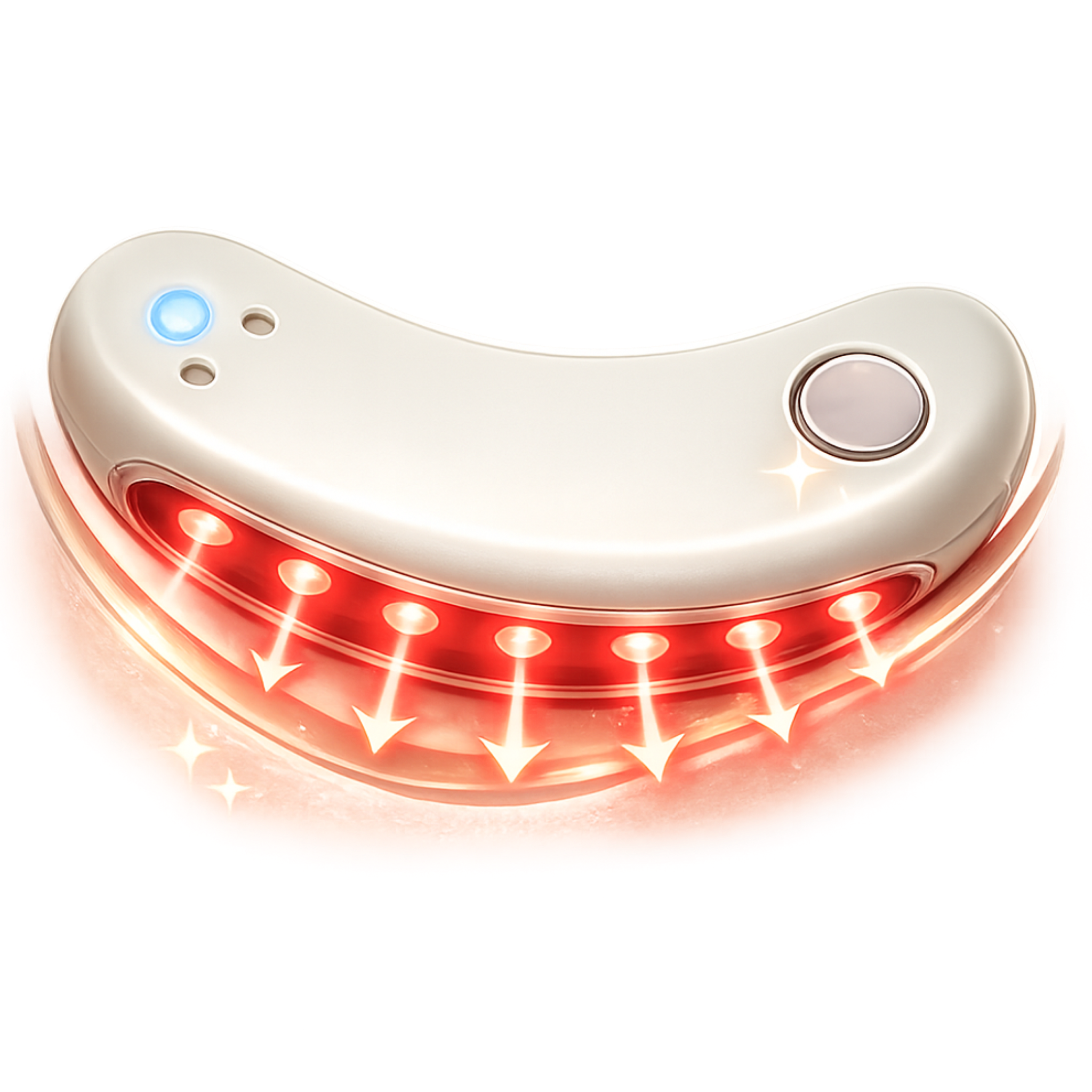 Targeted Red Light
 EMS Activation
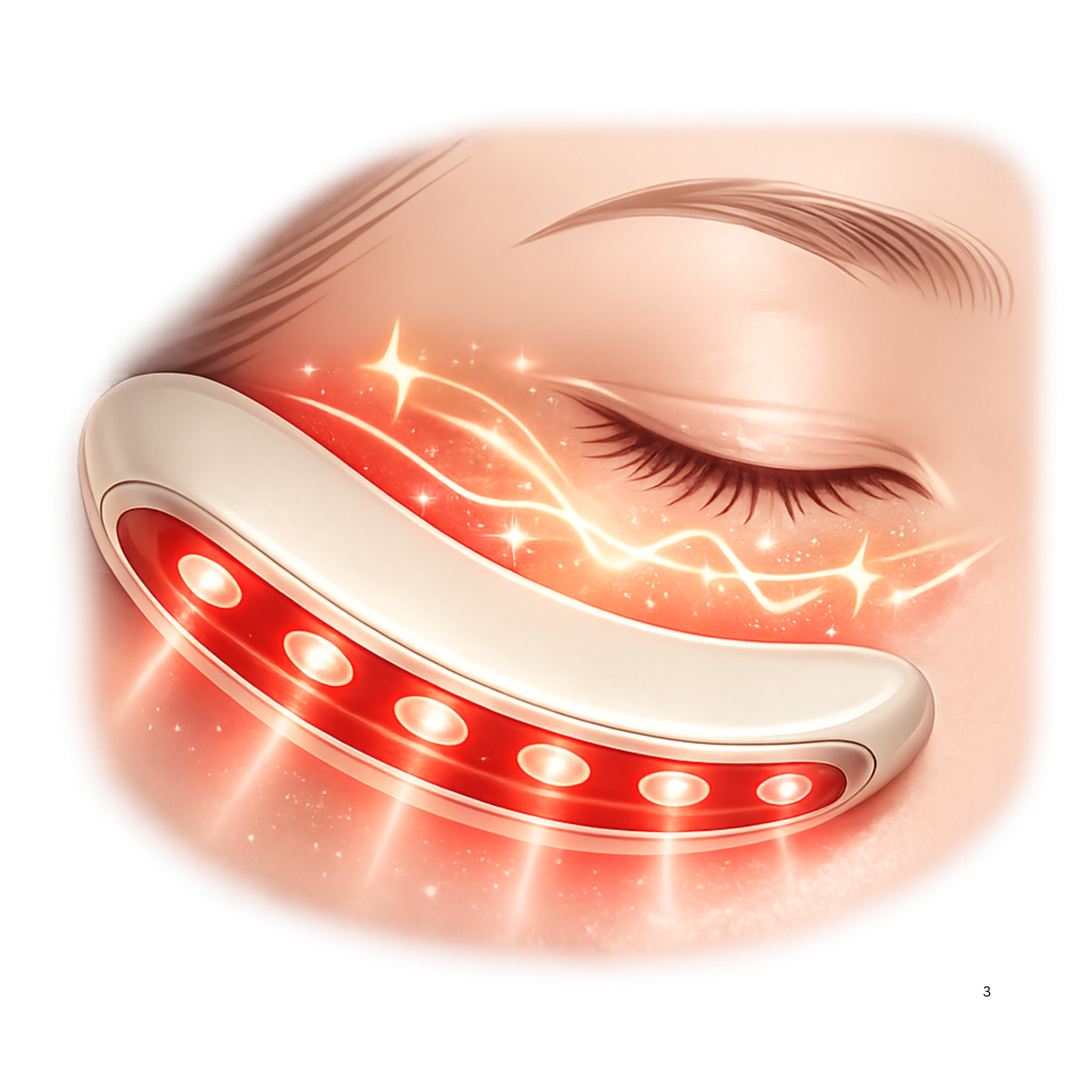 Direct-to Skin Delivery
Couldn't load pickup availability
- Visa payment method
- Master payment method
- American express payment method
- Apple pay payment method
- Google pay payment method
- Discover payment method
60-Day Money-Back Guarantee
60-Day Money-Back Guarantee
Your Aevum electronic devices are covered for one year from the date of delivery against defects in materials and workmanship under normal use. If a covered defect occurs, we’ll repair or replace the affected device at no charge.
You’ll also have 60 days to experience the Aevum system at home. Use it consistently as directed, and if you’re not satisfied, contact us within 60 days of delivery and return the complete system in accordance with our return policy for a full refund of the purchase price.
The limited warranty does not cover replaceable gel pads, normal wear and tear, accidental damage, misuse or unauthorized modifications. Terms and conditions apply.
Shipped by -.
“I bought this because my under-eyes were making me look exhausted even when I’d slept well. I’d tried expensive creams, cooling patches and concealer, but nothing felt like it was actually targeting the area. The Red Light + EMS treatment takes only 10 minutes and fits easily into my evening routine. With consistent use, my under-eyes started looking smoother, brighter and less puffy—and I feel much more confident leaving the house without piling on concealer.”
What makes Aevum different from LED masks or light-therapy glasses?
What makes Aevum different from LED masks or light-therapy glasses?
Aevum is designed specifically for the under-eye area. Instead of suspending light in front of the face, the rechargeable devices are secured directly beneath the eyes using conductive gel pads. This keeps the red light consistently positioned while also creating the skin contact required for EMS.
Is this just a reusable eye patch?
Is this just a reusable eye patch?
No. The crescent-shaped pieces are rechargeable electronic treatment devices containing integrated red-light LEDs and EMS technology.
You reuse the devices and replace only the conductive gel pads when they lose adhesion.
You replace the gel—not the technology.
How do red light and EMS work together?
How do red light and EMS work together?
Red light is used to support smoother, brighter and healthier-looking under-eye skin.
EMS adds gentle electrical stimulation through the conductive gel interface, creating a second targeted treatment experience for the area.
You can choose between:
- Red light only
- Red light + EMS
What concerns is it designed to target?
What concerns is it designed to target?
Aevum is designed to improve the visible appearance of:
- Dark, tired-looking under-eyes
- Fine lines and crepey-looking texture
- Puffiness and under-eye bags
- Dull or fatigued-looking skin
Results can vary because dark circles and under-eye bags may have different causes, including pigmentation, puffiness, skin quality and facial structure.
What does the EMS feel like?
What does the EMS feel like?
You may feel a light tingling, tapping or pulsing sensation beneath the eyes.
It should feel gentle—not painful. Sensation can vary depending on skin contact and placement. You can use red-light-only mode whenever you prefer a treatment without EMS.
How long does each treatment take?
How long does each treatment take?
Each session takes 10 minutes.
Once activated, the devices run hands-free and automatically switch off when the treatment is complete.
How often should I use it?
How often should I use it?
Use daily or according to the directions included with your device.
Red-light routines are based on consistency rather than a single treatment, so regular use is recommended for the best experience.
How soon could I notice a difference?
How soon could I notice a difference?
Some people may notice that the under-eye area looks temporarily more refreshed after treatment.
Changes in the appearance of fine lines, texture and overall brightness generally require consistent use over time. Individual results will vary, and Aevum is not positioned as an overnight fix.
Can I apply skincare products before using it?
Can I apply skincare products before using it?
Begin with clean, completely dry skin.
Oils, creams and serums may affect adhesion and interfere with the conductive gel interface. Apply your preferred eye cream or serum after completing the 10-minute session.
How do the conductive gel pads work?
How do the conductive gel pads work?
The replaceable gel pads:
- Secure each device beneath the eye
- Maintain close and consistent skin contact
- Conduct the EMS signal
- Allow for hands-free treatment
Replace them once they no longer adhere securely or feel comfortable. Store them with their protective films attached between uses.
Is it safe to use around the eyes?
Is it safe to use around the eyes?
The devices should be positioned beneath the eyes as directed—not on the eyelids or directly against the lash line.
Do not stare directly into the illuminated LEDs. Follow all instructions and safety warnings supplied with the device.
Do not use EMS if you have an implanted electronic device such as a pacemaker. Those who are pregnant, photosensitive, taking light-sensitizing medication, managing an eye or skin condition, or recovering from a cosmetic procedure should speak with an appropriate healthcare professional before use.
Can I use it after Botox, filler or another cosmetic treatment?
Can I use it after Botox, filler or another cosmetic treatment?
Ask your injector or treating professional before using red light or EMS over a recently treated area. Allow the area to heal completely and follow their recommended waiting period.
What comes with my Aevum device?
What comes with my Aevum device?
Each set includes:
- 2 rechargeable Red Light + EMS under-eye devices
- 5 pairs of conductive gel pads
- 1 charging case
- 1 USB-C charging cable
- 1 user manual
What happens if it isn’t right for me?
What happens if it isn’t right for me?
Your purchase is protected by our 60-Day Satisfaction Guarantee. Contact us within 60 days of delivery and return the complete system according to our return policy for a refund of the purchase price.
The rechargeable devices are also covered by a 1-Year Limited Warranty against defects in materials and workmanship under normal use.


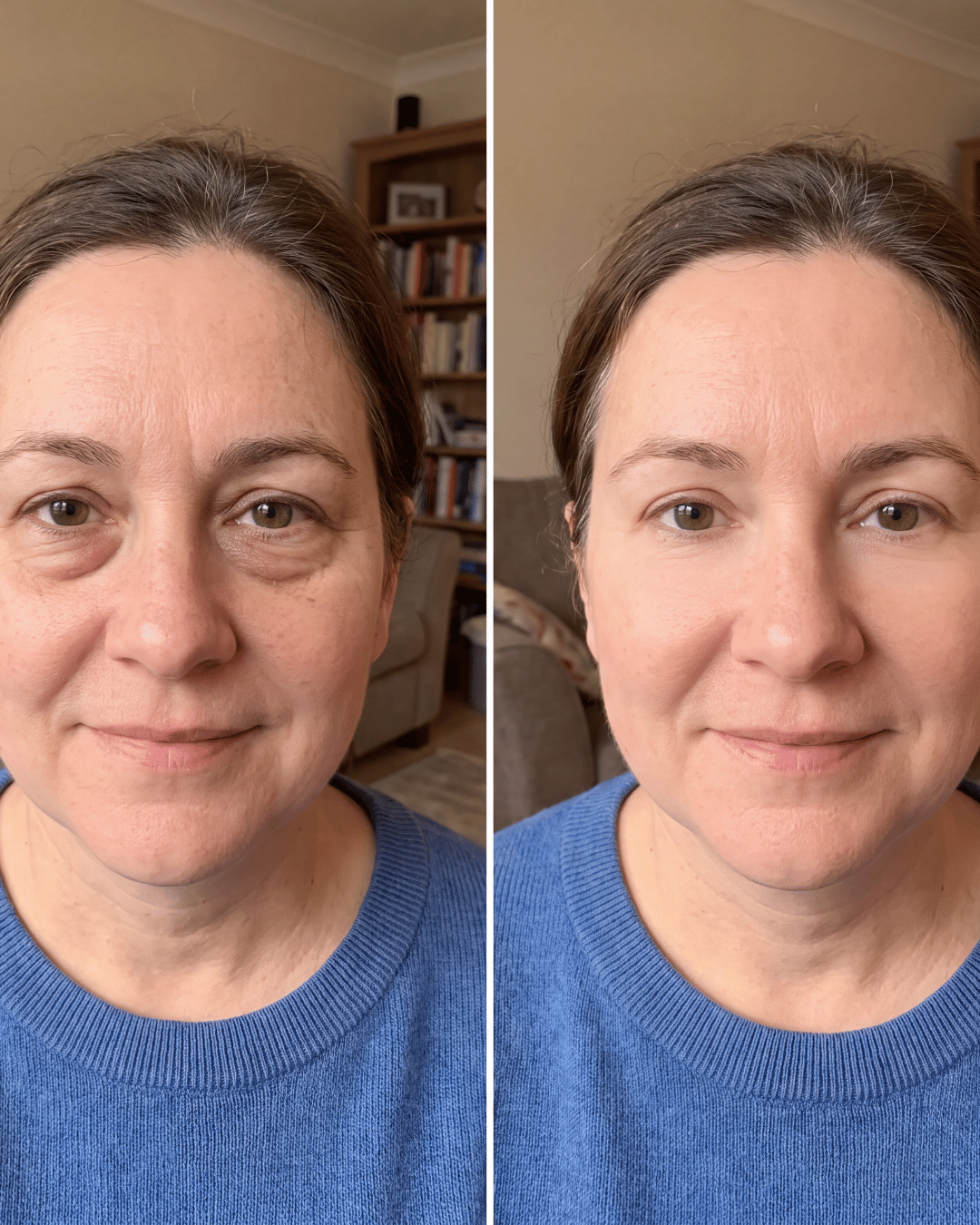
Why They Wish They Started Sooner
Brighter-looking under-eyes. Smoother-looking skin. A simple routine they can actually maintain.
-

2h ago
I didn’t realise how tired my under-eyyes were making my whole face look until I saw myself in photos. After using Aevum consistently, my husband was actually the first person to say I looked more rested. I still wear makeup, but I no longer feel like I need layers of concealer every morning.
214
29 Comments
LikeCommentShare -

2h ago
My biggest issue was the puffiness underneath my eyes, especially first thing in the morning. I love that the devices stay directly in place and that I can use red light with the gentle EMS setting. The 10-minute routine feels easy enough to actually stick with, and my eye area looks much fresher.
192
13 Comments
LikeCommentShare -

2h ago
I was already interested in red light therapy, but I didn’t want another huge face mask. What convinced me was that Aevum was made specifically for the under-eye area and also included EMS. With regular use, the skin beneath my eyes started looking smoother and my makeup stopped settling into the fine lines as much
135
19 Comments
LikeCommentShare


Stop Buying Another Temporary Fix for the Same Tired-Looking Eyes.
Eye creams moisturize. Concealer covers. Cold rollers feel good for a few minutes.
But if dark circles, visible lines and under-eye bags keep returning, your routine may be missing a treatment designed specifically for the area.
The Aevum Complete Eye Renewal System gives you three complementary ways to care for tired-looking eyes—whether you want a targeted 10-minute treatment, a quick handheld routine or full-coverage cooling relief.
Benefit points
✅ Target with Red Light + EMS
Use the rechargeable Under-Eye Renewal Lightwear directly beneath the eyes for a precise, hands-free treatment.
✅ Revive with Red Light Gua Sha
Use the handheld tool around the eye and face whenever you want a quicker alternative to wearing the Lightwear devices.
✅ Recover with Full-Coverage Cooling
Finish with the Cooling Eye Recovery Mask to soothe heavy-feeling eyes and temporarily reduce the appearance of puffiness.
✅ Try the Complete System Without the Risk
Protected by a 60-day money-back guarantee and a one-year limited device warranty.
Emotional close
You do not need to keep hiding how tired your eyes look.
You need a routine advanced enough to target the area—and simple enough to actually use consistently.
How Lightwear Works
The Technology Is Reusable. Only the Gel Pads Are Replaced.
Aevum Lightwear is not a disposable eye patch. Each crescent-shaped piece is a rechargeable Red Light + EMS treatment device.
1. Attach
Apply one conductive gel pad to the skin-facing side of each device.
2. Place
Position the devices beneath your eyes on clean, dry skin. The gel keeps them securely in place and conducts the EMS stimulation.
3. Treat
Choose Red Light Only or Red Light + EMS, then relax for the automatic 10-minute session.
4. Recharge and Reuse
Return the devices to the charging case after treatment. Replace the gel pads only when they lose their adhesion.
You replace the gel—not the technology.
No creams, liquids or serums are needed during treatment. Apply skincare afterward